
Free written scope consultation - allowances, timeline, and change-order rules on paper before a single trade is scheduled
 Before
 After
After Before
 After
After Before
 After
AfterAtlas Driveway & Pavers: The Long Beach Owner’s Guide
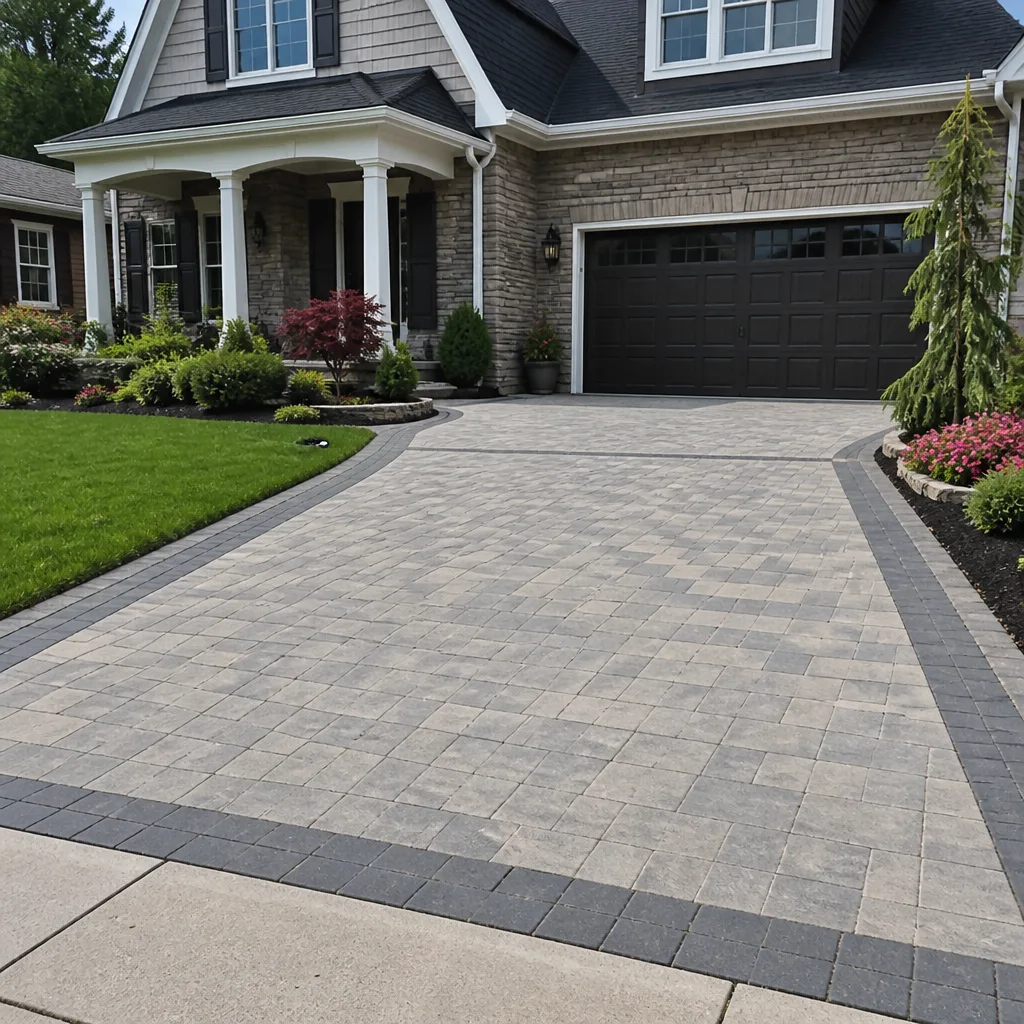
We stock and install Atlas-compatible driveway and paver systems in Long Beach, with typical installed pricing running $7,000-$18,000 for paver driveways and $3,500-$11,000 for paver patios depending on substrate condition and pattern complexity. Most Atlas pattern replacements and extensions can be sourced within 24-48 hours through our network of fifty-plus vetted brands. Homeowners usually discover the failure when individual pavers begin rocking underfoot, edge restraints pull away from the bedding course, or surface drainage reverses toward the garage after winter rains - all signs that the interlock or base has degraded beneath the visible layer.
Which Atlas Models This Applies To
Atlas produces several paver lines common in Southern California installations from the mid-2000s forward: the Cambridge Cobble series (tumbled, multi-size random pattern), Bergerac (slate-textured, modular rectangle), and Dublin Cobble (classic rounded-edge driveway paver). Each carries a manufacturing date stamp on the pallet tag and sometimes an inkjet code on the paver edge itself. The critical compatibility gotcha in Long Beach is thickness: Atlas residential driveways are typically 60mm (2⅜”), while commercial or heavy-vehicle installations use 80mm. Installing the wrong thickness over an existing bedding course throws the entire surface plane off by ¾”, which we’ve seen trap water against garage thresholds in the Los Altos and Bixby Knolls neighborhoods where grade is already tight.
OEM Atlas pavers match color lots from the original manufacturing run; aftermarket equivalents from Belgard or Techo-Bloc can match dimensionally but rarely blend seamlessly on weathered installations. We source both and will show you the sample boards side by side before quoting.
Signs Your Atlas Driveway & Pavers Is Failing
- Individual pavers rock or click under tire or foot traffic. This indicates bedding sand has washed out or compacted unevenly, breaking the interlock that distributes load across adjacent units. In Long Beach’s clay-heavy soils, this often follows a single season of poor drainage.
- Edge restraints bow outward or separate from the pavement edge. Spikes corrode in our coastal air, or the PVC strip itself fatigues after 10-15 years of thermal cycling. Once the edge goes, the field pavers migrate laterally under braking and turning loads.
- Standing water persists more than 30 minutes after rain. The original 1% cross-slope has flattened due to base settlement or root intrusion from parkway trees common in California Heights and Wrigley. Water that sits accelerates efflorescence and freeze-thaw damage even in our mild climate.
- Weeds or grass sprout through joints despite previous polymeric sand application. The sand bond has failed, usually from improper activation during installation or degradation from UV and salt air. Each gap is a point where water penetrates to the base.
- Surface spalling or corner chipping on individual pavers. Atlas pavers with excessive absorption (above 5% per ASTM C936) are vulnerable in freeze events; we’ve also seen this on installations where de-icing salts were used heavily during rare cold snaps.
 Before
 After
AfterReplacement Cost & What’s Included
| Scope | Long Beach Price Range | What’s Included |
|---|---|---|
| Partial paver replacement (localized failure, <100 sq ft) | $1,200-$3,500 | Excavation to base, bedding sand refresh, paver install, polymeric sand, edge restraint repair |
| Full driveway replacement, Atlas or equivalent pavers | $7,000-$18,000 | Removal, base reconstruction with Class 2 aggregate, bedding course, pavers, joint sand, compaction, written 365-Day Done Right Promise |
| Paver patio replacement or extension | $3,500-$11,000 | Same as above, scaled to footprint; includes drainage planning to existing grade |
| Driveway sealing (maintenance, not repair) | $250-$700 | Cleaning, joint sand top-up, breathable sealer application |
What drives the range: access for equipment (narrow Long Beach lots require handwork), base condition (clay expansion vs. stable sandy soils), and pattern complexity - herringbone and random patterns consume 8-12% more material than running bond. Under Clause 1 of the Haven Standard, your quote is a flat written price with line-item scope before any work starts; no change proceeds without a signed change order. Every job carries our 365-Day Done Right Promise and a documented photo record of base condition, compaction passes, and finished surface.
DIY or Call Us?
What you can safely check yourself: lift a loose paver and photograph the bedding sand depth and base material beneath; measure the thickness of several pavers with a tape measure to confirm 60mm vs. 80mm; trace the drainage path with a hose to see where water actually goes. These observations help us diagnose over the phone.
Where DIY goes wrong: base compaction requires a plate compactor and controlled lift thickness (6″ maximum per pass for aggregate base); without it, the surface fails again in one to two seasons. Edge restraint installation demands a concrete haunch or spiked restraint at precise setback - too close and pavers chip, too far and the edge crumbles. And polymeric sand activation is unforgiving; we’ve been called to Long Beach jobs where homeowners hosed it prematurely, cementing the surface and trapping efflorescence beneath.
We’re an independent service provider, not affiliated with Atlas. If you need a match confirmed or a base assessed, call (424) 567-7009 and we’ll schedule a free estimate with sample boards in hand.
FAQs
Properly installed Atlas pavers on a compacted aggregate base last 25-30 years in Long Beach, though joint sand and edge restraints need attention at 8-12 year intervals. Coastal salt air accelerates metal edge restraint corrosion, so we often specify aluminum or PVC alternatives within a few miles of the water. Call (424) 567-7009 for an exact quote on your specific installation - estimates are free.
Localized failures - a few rocking pavers, a single blown edge - can be spot-repaired by lifting the affected area, re-bedding, and reinstalling. Widespread base settlement or pattern-wide efflorescence requires full removal and reconstruction; patching over a failed base simply postpones the inevitable. We assess both options and quote only what the condition warrants. Call (424) 567-7009 for an evaluation.
A typical Long Beach driveway of 400-600 square feet takes 3-5 working days: one day removal and base prep, one day base compaction and bedding, two days paver installation and initial compaction, one day joint sand and final compaction with plate and roller. Weather, access, and utility locates can extend this; we build realistic timelines into every written quote. Call (424) 567-7009 to schedule.
We don’t warehouse pallets - paver color lots vary by manufacturing run, and matching weathered installations requires current production samples. We maintain active accounts with Atlas distributors in Orange County and the Inland Empire, and most standard colors (Sahara, Rio, Victorian) ship within 24-48 hours. Custom or discontinued colors may require 2-3 weeks; we’ll confirm availability before any quote is finalized. Call (424) 567-7009 to check your specific pattern and color.
Measure twice, write it down, then build it. That’s how we’ve kept projects within a few percent of the agreed price across 4,000-plus jobs since 2007.
Written by Grant Rowan, Owner, Rowan Construction Group Long Beach at Rowan Construction Group Long Beach, serving Long Beach and nearby areas.