
Free written scope consultation - allowances, timeline, and change-order rules on paper before a single trade is scheduled
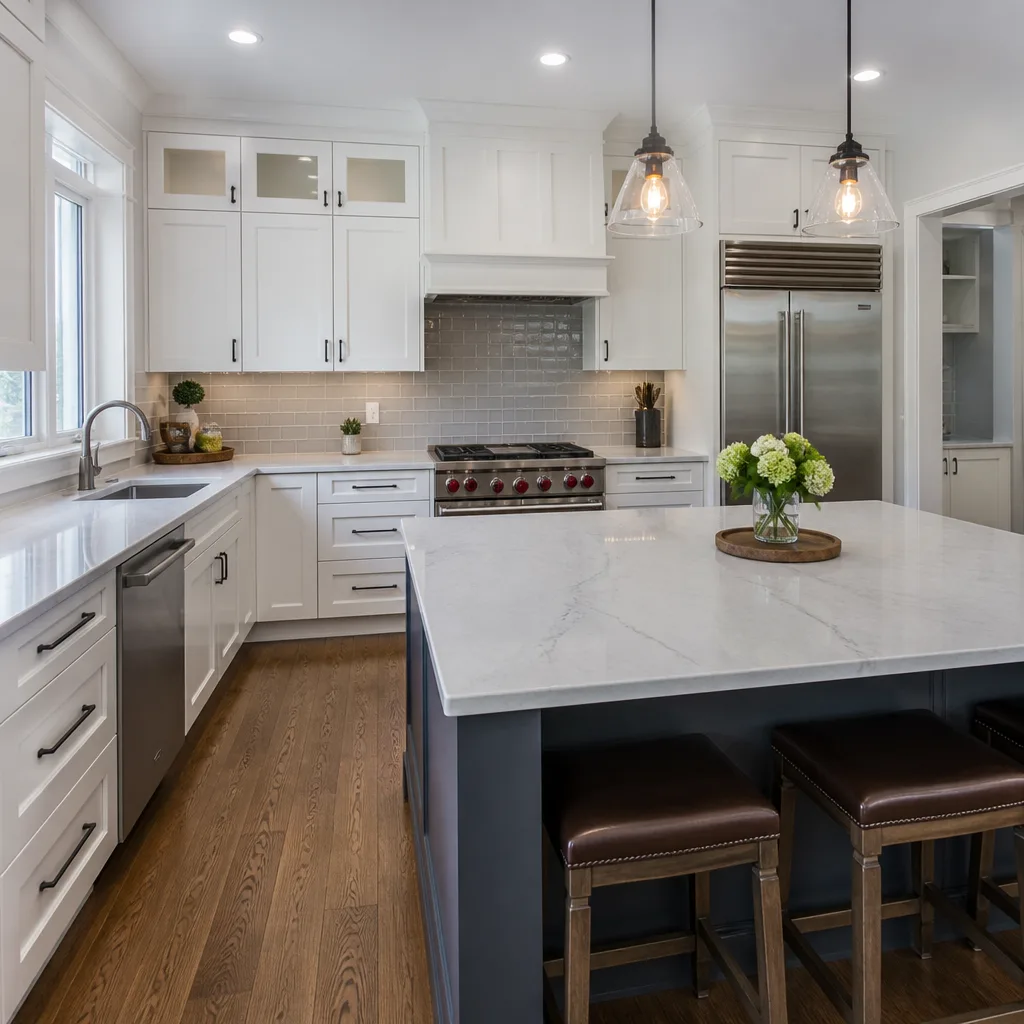
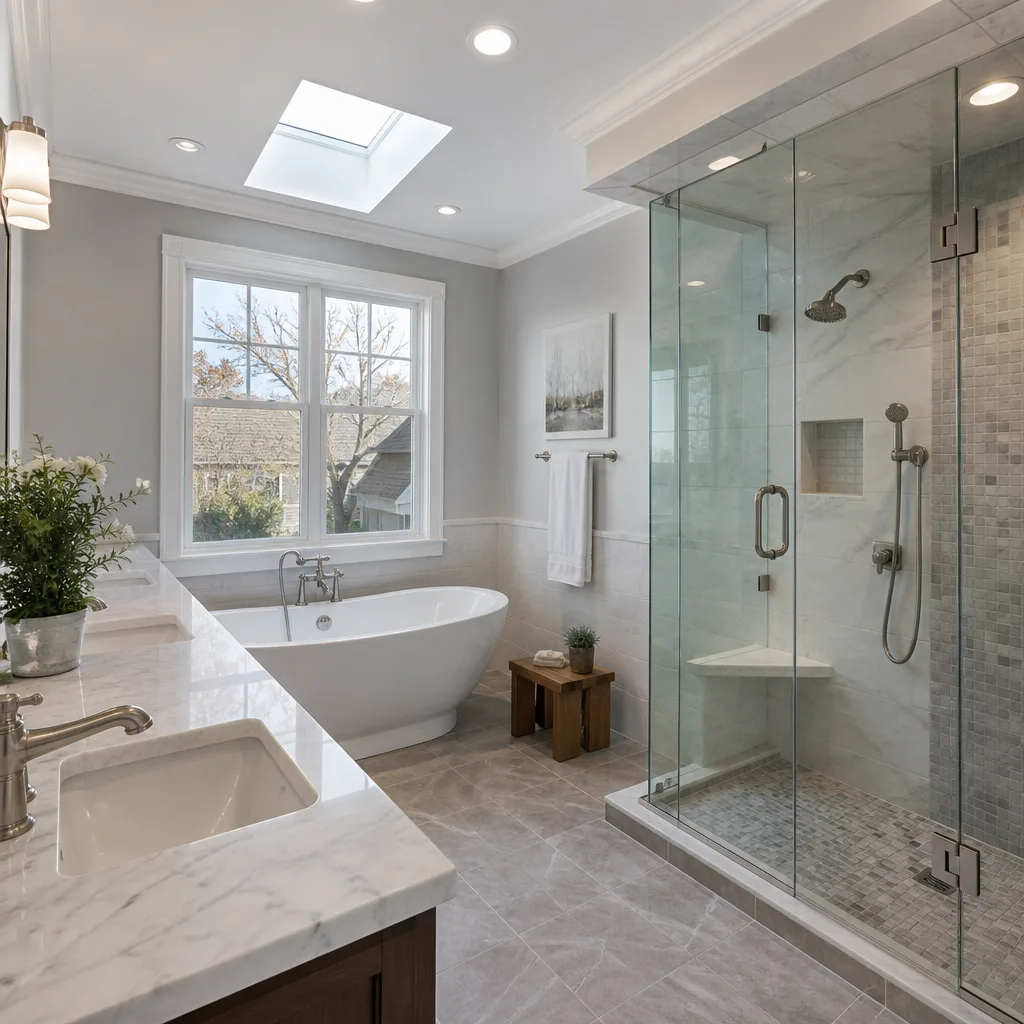
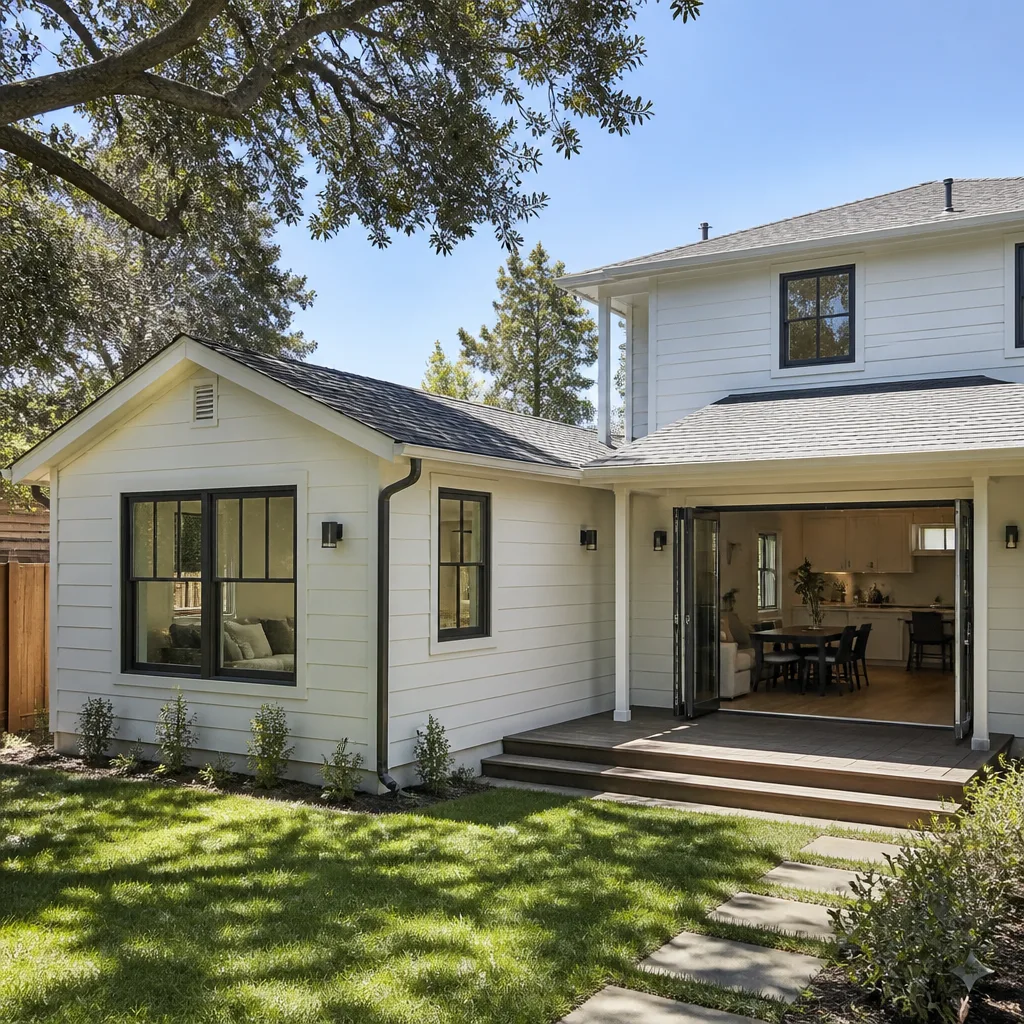
 Before
 After
After Before
 After
After Before
 After
AfterQuikrete Home Additions & ADU: The Long Beach Owner’s Guide
Quikrete concrete products are specified in roughly 60% of the home additions and ADU foundations we pour in Long Beach, with installed project costs running $45,000-$130,000 for additions and $90,000-$220,000 for detached ADUs. Most homeowners realize something’s off when hairline cracks spread across the slab within the first winter, or when the finish flakes where salt air meets a poorly cured pour. We stock Quikrete Crack Resistant and 5000 High Early Strength mixes on our Long Beach trucks, and we can spec the right product for your soil conditions the same day we measure.
Which Quikrete Models This Applies To
Quikrete doesn’t sell “home addition kits,” but their product lines show up in predictable places on Long Beach projects. Crack Resistant Concrete Mix (No. 1006-80) is what we order for most 4-inch slab-on-grade additions in Belmont Heights and Alamitos Beach, where the clay-heavy soil shifts with winter rains. For ADU foundations that need to hit 2,500 psi in 24 hours to keep framing on schedule, we spec Quikrete 5000 High Early Strength (No. 1007-80). The bag label matters: standard Quikrete Concrete Mix cures to 4,000 psi at 28 days, but 5000 hits that number in 28 days and reaches 1,500 psi inside 24 hours. We’ve seen framers show up on day two and start loading walls on standard mix that isn’t ready, which is how you get corner cracking at six months.
Identification is straightforward if the original contractor left records. Check the permit file for the concrete ticket, or look for the Quikrete batch sticker on exposed foundation walls in the garage or crawl space. If you’re matching an existing slab for a seamless addition, we pull a core sample to confirm compressive strength before we spec the mix. OEM Quikrete through our Long Beach supplier runs about 8% more than equivalent aftermarket from Sakrete or Spec Mix, but the color consistency matters when you’re pouring against cured concrete that’s been oxidizing since 2019.
Signs Your Quikrete Home Additions & ADU Is Failing
- Map cracking across the slab surface. This network of fine cracks usually means the pour dried too fast in Long Beach’s late-summer heat, or the finishers worked bleed water back into the surface. The top 1/8 inch loses strength and starts dusting under foot traffic.
- Corner lifting or separation from the stem wall. Clay soils in the Traffic Circle area expand when wet and contract in drought, shearing the slab away from its footing. We’ve measured 3/4-inch gaps on ten-year-old additions where the original contractor skipped the expansion joint.
- Spalling where the garage slab meets the driveway. De-icing salts aren’t common in Long Beach, but the marine layer deposits chlorides that migrate through porous concrete. Quikrete standard mix without air entrainment flakes in these conditions after five to seven years.
- Visible rust staining at rebar locations. When the concrete cover over steel is less than 1.5 inches, moisture from the soil wicks in and the rebar oxidizes. The expanding rust blows out chunks of concrete, and the structural capacity drops.
- Sloping or bouncy floors in the addition. This isn’t always the concrete’s fault, but in Long Beach’s older neighborhoods near the port, we’ve found original slab thicknesses of 3 inches instead of the 4-inch spec. The Quikrete cured fine; there just wasn’t enough of it.
 Before
 After
AfterReplacement Cost & What’s Included
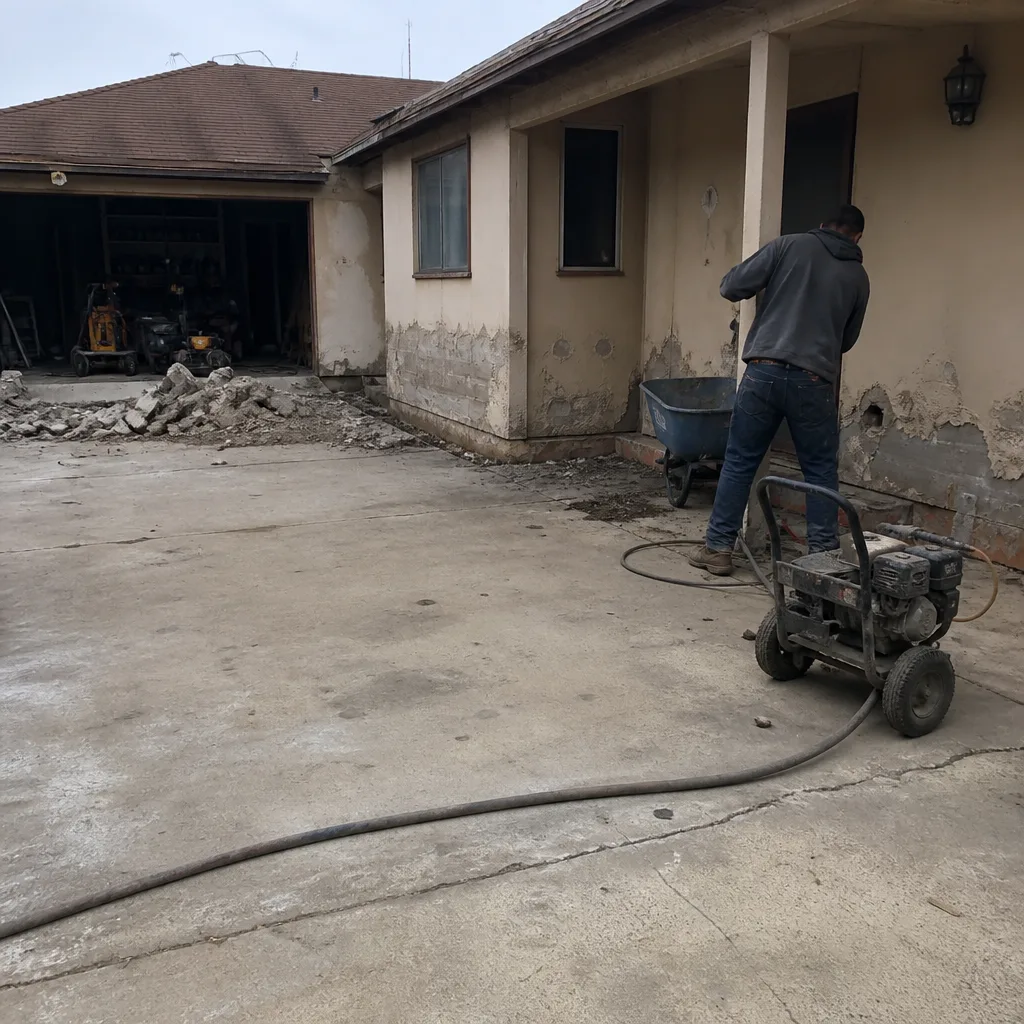
For a full Quikrete foundation replacement on a home addition in Long Beach, we quote $45,000-$130,000 depending on square footage, access for excavation equipment, and whether we’re tying into an existing structure or pouring standalone. An ADU foundation runs $90,000-$220,000, with the higher end covering full utility trenching and sewer lateral work that Long Beach Building & Safety requires for detached units. The written quote breaks out demolition, haul-away, formwork, rebar and mesh, the Quikrete mix specified to your soil report, pour and finish, and the 28-day cure schedule before we turn the site over to framing.
Under Clause 1 of The Haven Standard, that number is fixed before we cut concrete. If your geotechnical report calls for a vapor barrier or post-tension cables that weren’t in the original scope, we write a change order with a new price and both of us sign it before the work proceeds. Our 365-Day Done Right Promise covers the full installation, and every pour gets a documented photo record of the rebar layout, the slump test, and the finished grade.
DIY or Call Us?
There’s a safe middle ground here. A homeowner can check the crack pattern with a straightedge, measure slab thickness at an exposed edge, and photograph rust stains for documentation. What you shouldn’t do is core your own slab to test compressive strength, or attempt a partial-depth repair with bagged Quikrete from the hardware store. The bond between old and new concrete fails 80% of the time without proper surface prep and a bonding agent, and in Long Beach’s seismic zone D, a compromised foundation is a genuine structural liability.
Concrete work also moves fast once it starts. A four-yard Quikrete pour in July goes from plastic to unworkable in 45 minutes if you don’t have the crew and the tools staged. Measure twice, write it down, then build it. If you’re seeing the symptoms above, call (424) 567-7009 and we’ll schedule a free estimate with a written price before anyone picks up a chipping hammer.
FAQs
How long should a Quikrete foundation last in Long Beach?
A properly specified, placed, and cured Quikrete foundation should last 50-plus years in Long Beach’s climate. The failures we see at 10-15 years almost always trace back to mix selection for the soil type, inadequate curing in summer heat, or rebar placed too shallow. Call (424) 567-7009 for an exact quote on replacement - estimates are free.
Can the slab be repaired instead of replaced?
Partial repairs work for isolated spalling or surface cracks under 1/4 inch. We grind, patch with Quikrete Vinyl Concrete Patcher, and seal. But if the slab is lifting, the rebar is rusting, or you’re matching for a new addition, replacement is the honest recommendation. Call (424) 567-7009 for an exact quote - estimates are free.
How long does a full replacement take?
Demolition through final pour is typically 5-7 business days for a 400-square-foot addition slab, plus 7 days minimum cure before framing loads. Long Beach Building & Safety requires inspection at form/rebar and final pour, and we schedule those around their availability. Call (424) 567-7009 for timeline specifics on your project - estimates are free.
Do you stock Quikrete products on your trucks?
We keep Quikrete 5000, Crack Resistant, and FastSet Repair Mix on our Long Beach trucks for patch work and small pours. Full foundation loads come direct from the batch plant with a ticket showing slump, air content, and compressive strength target - documentation that’s included in your photo record, not an upgrade. Call (424) 567-7009 to schedule - estimates are free.
Rowan Construction Group Long Beach is an independent contractor and is not affiliated with Quikrete. We also stock and install products from KraftMaid, Cambria, and Silestone.
Written by Grant Rowan, Owner, Rowan Construction Group Long Beach at Rowan Construction Group Long Beach, serving Long Beach and nearby areas.