
Last updated September 24, 2026
Free written scope consultation - allowances, timeline, and change-order rules on paper before a single trade is scheduled
 Before
 After
After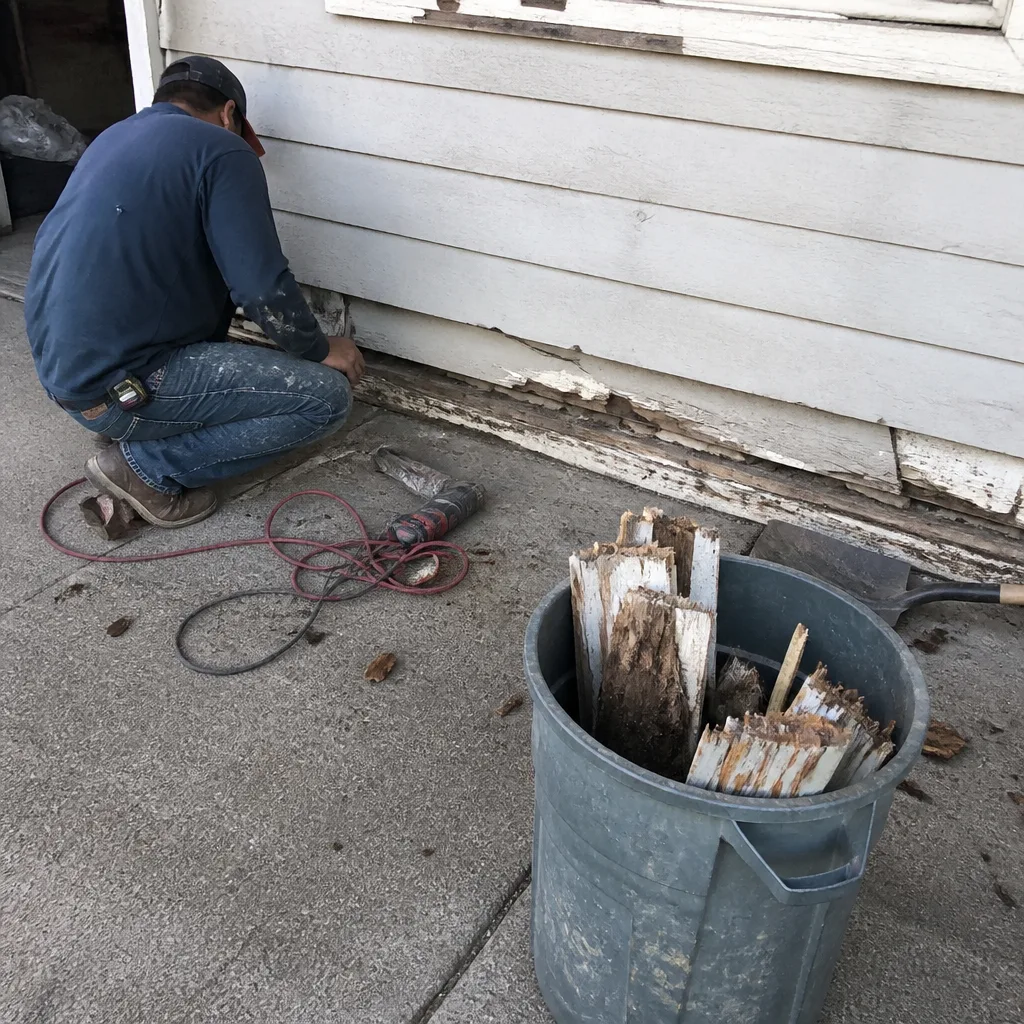 Before
 After
After Before
 After
AfterSeasonal Construction Care for Long Beach: Year-Round Homeowner’s Guide
Most homeowners in Long Beach assume mild weather means minimal maintenance. That assumption costs them. Santa Ana wind events here regularly push sustained winds of 35-55 mph from the northeast, driving dust and debris into weep screed gaps and attic vents in a direction that standard weather-facing inspections miss entirely. Most maintenance guides assume moisture comes from the west. In Long Beach, the damage pattern is more specific: marine layer winters saturate stucco from the ocean side, then Santa Ana winds pull that moisture through wall cavities from the opposite direction. This guide maps inspection and maintenance tasks to Long Beach’s actual quarterly climate pattern, with cost ranges drawn from our local project records and The Complete Guide to Construction in Long Beach.
Quick Answer
Seasonal construction care in Long Beach means four distinct inspection cycles: marine layer moisture checks in winter, sealant verification during June gloom, UV damage assessment in dry summer months, and Santa Ana wind preparation in fall. Homeowners who follow this quarterly schedule typically spend $400-$900 per year on preventive maintenance versus $3,500-$8,000 on reactive repairs after damage accumulates. The key is matching each task to Long Beach’s specific climate drivers, not a generic four-season calendar.
Table of Contents
- Q1 (January-March): Marine Layer Condensation Season
- Q2 (April-June): June Gloom and End-of-Rain-Season
- Q3 (July-September): Dry Heat and UV Peak
- Q4 (October-December): Santa Ana Wind Preparation
- Which Maintenance Tasks Void Manufacturer Warranties
- Common Mistakes to Avoid
- When to Call a Professional
- Frequently Asked Questions
 Before
 After
AfterQ1 (January-March): Marine Layer Condensation Season
Long Beach’s winter marine layer brings sustained relative humidity above 85% for 12-20 mornings per month from January through March. This isn’t rain; it’s airborne moisture that condenses on cool surfaces, particularly north and east-facing walls that don’t dry during short winter days. In neighborhoods like Belmont Shore and Naples, where homes sit close to the water table, we’ve seen this cycle cause more damage than actual rainfall.
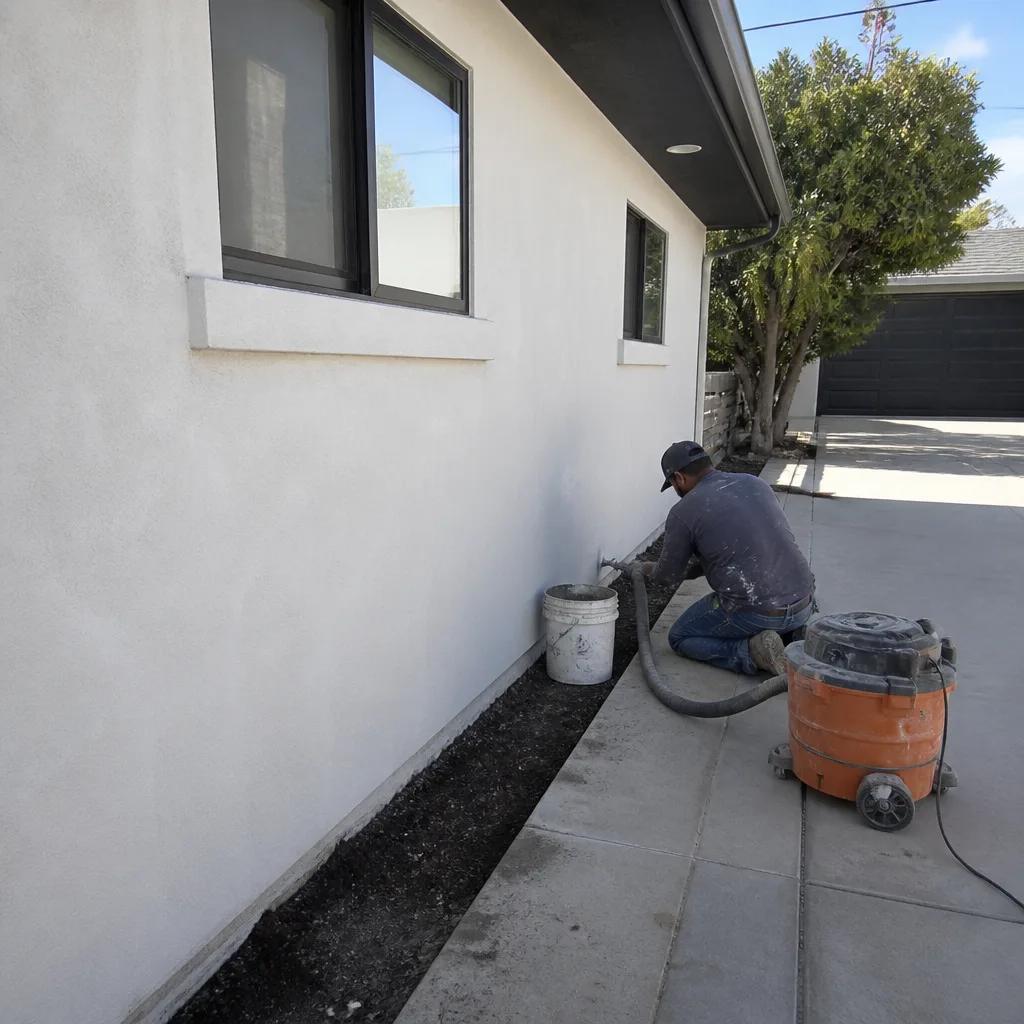
Stucco Weep Screed Inspection
Weep screed is the perforated metal strip at the base of stucco walls that allows moisture to drain out. When marine layer moisture saturates stucco daily, the weep screed must function perfectly or water pools behind the exterior coating. Here’s our inspection protocol:
- Clear vegetation and soil to expose the full weep screed line - typically 4-6 inches above finished grade per California Building Code.
- Probe each weep hole with a 16-penny nail; blockage is common where soil splashes or painters have caulked over openings.
- Check for rust-through on the metal strip itself, especially within 3 feet of downspout outlets where splashback concentrates.
- Look for efflorescence - white mineral deposits - on the foundation below the screed, which indicates water is exiting but carrying dissolved salts.
Compromised weep screed in Long Beach typically costs $12-$22 per linear foot to replace, including removal of the bottom stucco course, new metal installation, and re-coating - see our Construction Cost Breakdown: The Long Beach Homeowner’s Reference for 2026 for full project estimates. On a 2,000 square foot home with perimeter weep screed, that’s $480-$880 for full replacement versus $3,200-$5,500 if moisture has rotted the sill plate behind it.
Attic Ventilation Baffles
Marine layer moisture enters attics through ridge vents and soffit openings, then condenses on the underside of roof sheathing when night temperatures drop. In Long Beach’s climate, the critical issue is baffle placement: insulation contractors often install baffles only at the eaves, leaving the mid-attic space unprotected from wind-driven moisture.
We inspect for:
- Dark staining on roof sheathing, particularly the northeast quadrant where marine layer winds first contact the roof
- Compressed or displaced insulation near baffle openings, which indicates air is moving but not being directed properly
- Mold growth with a square, patchy pattern - this distinguishes condensation mold from roof leak patterns, which follow rafter lines
Crawl Space Vapor Barrier
Long Beach’s high water table means crawl spaces in Belmont Heights, Alamitos Beach, and other low-lying areas maintain 70%+ relative humidity year-round. A 6-mil polyethylene vapor barrier on the soil is the minimum; we specify 10-mil reinforced polyethylene in marine-adjacent zones because the standard product degrades from underside condensation. Check seams annually - they should be overlapped 12 inches and sealed with vapor-barrier tape, not duct tape, which fails in humid conditions within 18 months.
Q2 (April-June): June Gloom and End-of-Rain-Season
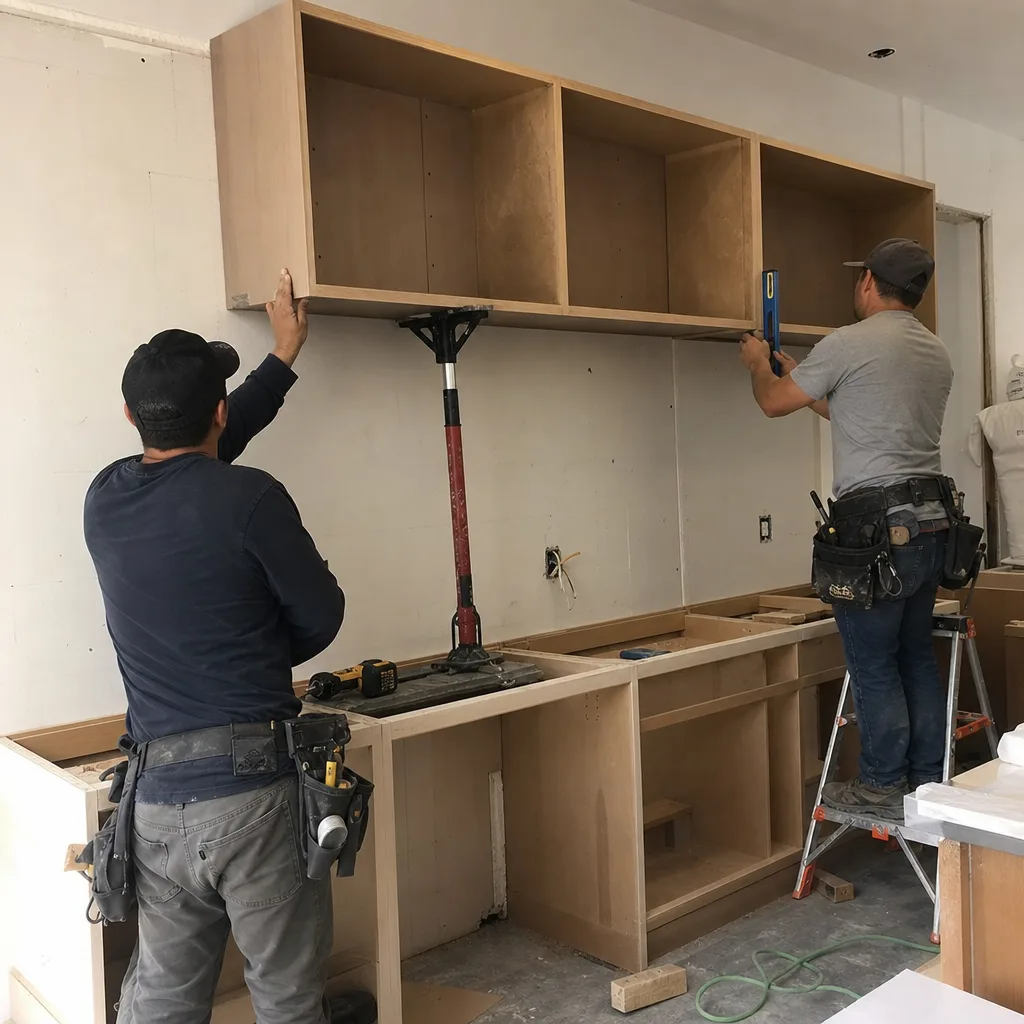
June gloom in Long Beach isn’t just an inconvenience for beach plans. The pattern - heavy overnight marine layer that burns off by midday - creates repeated wet-dry cycles on exterior surfaces. Materials expand with morning moisture, then contract under afternoon UV. Sealants that survive constant wet or constant dry conditions often fail under this oscillation.
Window and Door Threshold Seal Inspection Protocol
This is our systematic check for Long Beach homes:
- Close each door and window, then pass a flashlight beam across the threshold from the exterior. Any visible light indicates gap.
- Run a strip of paper through the closed threshold; resistance should be consistent. Spots where the paper slides freely mean compression seal failure.
- Check the exterior sealant bead at the frame-to-wall junction. In Long Beach, we expect 3-5 year replacement cycles on south and west exposures; north and east may last 7-9 years due to reduced UV.
- Inspect weep holes in window frames - the small slotted openings at the sill - for caulk obstruction, which is the most common homeowner error we correct.
Sealant Selection for Coastal UV
Standard latex caulk degrades in Long Beach’s UV exposure within 18-24 months on south-facing surfaces. For threshold and frame sealing, we specify SikaFlex-1A or equivalent polyurethane sealant, which maintains elasticity through 10+ years of UV cycling. The material cost difference is significant - roughly $8-$12 per tube versus $3-$4 for latex - but the labor to remove failed latex and re-seal every two years eliminates any savings.
For window and door replacement projects in Long Beach, we include SikaFlex-1A in our written scope as standard, not as an upgrade. Under Clause 1 of the Haven Standard, the price is written before anyone starts, and that price includes materials that match the actual exposure conditions.
Roofing Fastener and Flashing Check
The end of rain season is the moment to inspect what winter weather revealed. In Long Beach, this means checking specifically for:
- Lifted flashing at plumbing vents and chimney saddles, where thermal cycling has broken sealant bonds
- Exposed nail heads on composition shingle roofs - the factory-applied sealant strip often fails after one wet-dry cycle if the nail wasn’t fully seated
- Granule accumulation in gutters, which indicates the beginning of UV degradation on older shingles
We document each finding with photos, included as standard on every Rowan Construction Group Long Beach visit. The customer receives the photo record before we leave the property.
Q3 (July-September): Dry Heat and UV Peak
Long Beach’s summer dry season brings sustained UV index above 10 and temperatures in the 80s-90s with humidity below 50%. This is when latent moisture from winter finally evaporates from wall cavities, often revealing damage that was hidden by saturated materials. It’s also when roofing materials experience maximum thermal expansion and UV degradation.
Roofing Granule Loss Assessment: The Downspout Catch Method
Granules on composition shingles aren’t decorative; they’re the UV protection layer. When granules wash off, the asphalt substrate degrades rapidly. Our field method for quantifying loss:
- Place a clean 5-gallon bucket under each downspout outlet during the first rain of fall (typically October in Long Beach).
- Collect runoff for the full storm event, then pour through a fine mesh strainer.
- Measure collected granule volume. Less than 1/4 cup across all downspouts indicates normal aging. More than 1 cup suggests accelerated degradation requiring professional inspection.
- Note the color of collected granules. Uniform color matching the shingle field is normal wear. Mixed colors or black asphalt chunks indicate the substrate is exposed and failing.
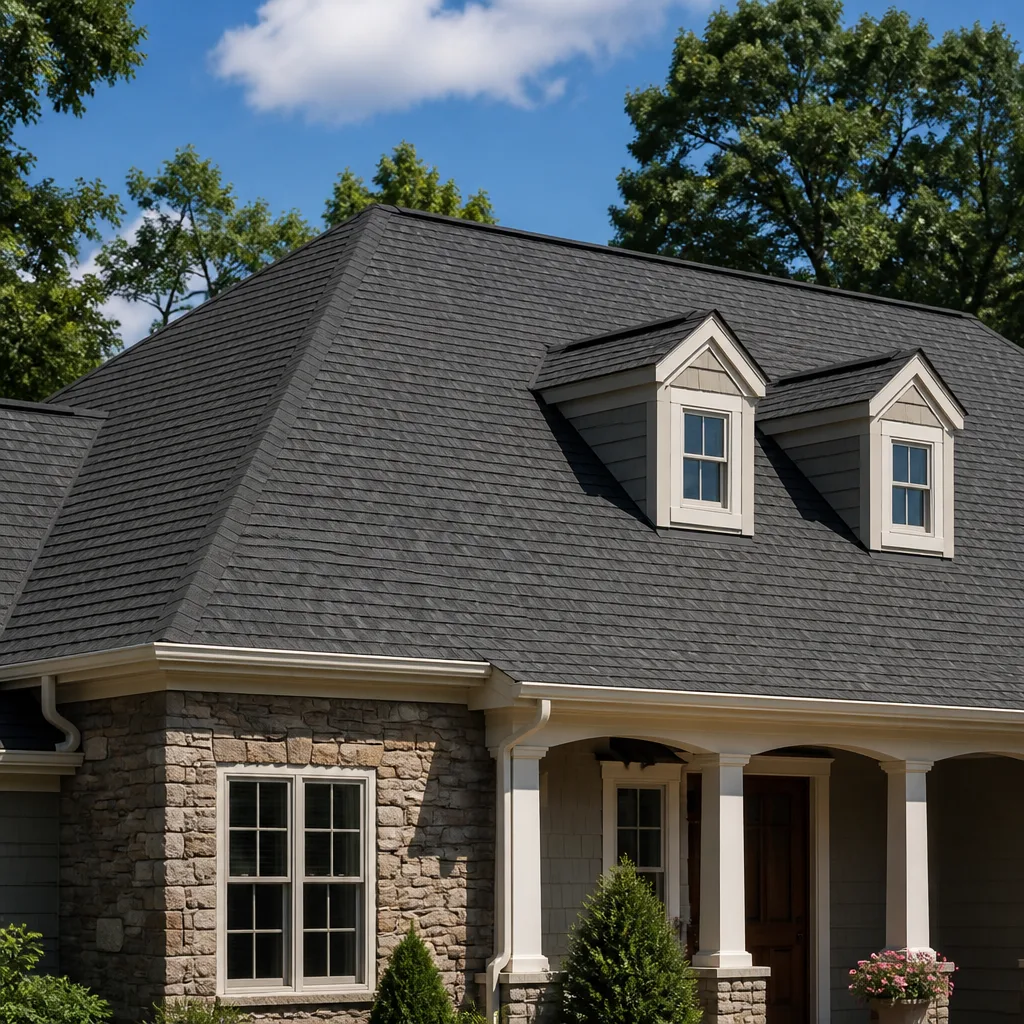
On a typical Long Beach home with 1,800 square feet of roof area, granule loss patterns vary dramatically by exposure. South-facing slopes may need replacement 5-7 years before north-facing sections on the same roof.
Class 4 Impact-Rated Shingle Cost Comparison
For homeowners considering roofing replacement in Long Beach, the upgrade from standard 3-tab to Class 4 impact-rated shingles (UL 2218 tested) carries real cost differences:
| Material | Cost per Square (100 sq ft) | Total Material for 1,800 sq ft | Key Difference |
|---|---|---|---|
| Standard 3-tab asphalt | $85-$115 | $1,530-$2,070 | 20-25 year service life in Long Beach UV |
| Architectural laminate (standard) | $110-$145 | $1,980-$2,610 | 25-30 year service life, better wind resistance |
| Class 4 impact-rated (GAF Timberline AS II or Owens Corning Duration Storm) | $155-$195 | $2,790-$3,510 | 30+ year service life, insurance discounts often 10-25% |
The Class 4 upgrade adds $1,200-$1,800 to material cost on a typical Long Beach home, but several insurers offer premium reductions that recover this within 4-7 years. We note qualifying products in our written quotes when homeowners request them.
Exterior Wood and Paint Adhesion
Dry heat causes paint film to contract; if adhesion is failing, this is when it reveals itself. Check fascia boards, rake boards, and window sills by pressing a fingernail firmly into the paint surface. Paint that chips or lifts is failing; paint that dents but stays bonded is sound. In Long Beach’s climate, we see the most adhesion failure on east-facing trim, where morning marine layer moisture swells the substrate before afternoon heat contracts the paint film.
Q4 (October-December): Santa Ana Wind Preparation
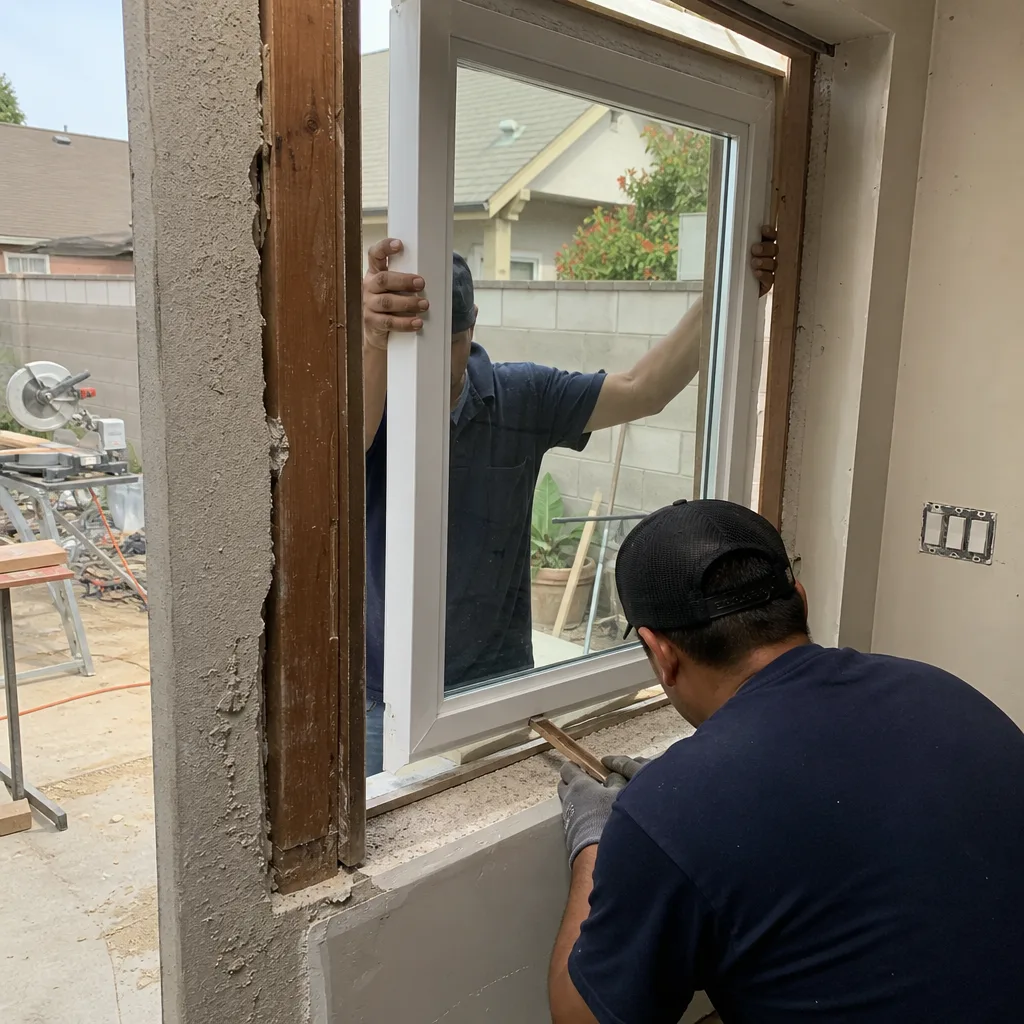
The Santa Ana wind pattern defines Long Beach’s fall maintenance priorities. These are dry, hot winds from the northeast - the opposite direction of prevailing onshore flow - and they carry desert dust that abrades seals, infiltrates attic spaces, and drives debris into gaps that face away from normal weather patterns.
Attic Vent Screen Inspection
Standard ridge vents and gable vents face south or west to shed rain. Santa Ana winds hit from the northeast, blowing directly into the back side of these vents or pressurizing soffit vents that aren’t designed for reverse flow. Our pre-wind-season check:
- Inspect all vent screens for mesh integrity. Standard 1/4-inch hardware cloth stops rodents but passes fine dust; we specify stainless steel mesh with openings no larger than 1/8 inch in Santa Ana-exposed zones.
- Check that ridge vent internal baffles are intact - these prevent wind-driven rain entry, but also reduce dust infiltration when winds reverse.
- Verify soffit vent balance: intake area should equal or exceed exhaust area. Pressurized soffits in Santa Ana conditions can blow insulation back from eaves, creating thermal bypasses.
In the 2023 Santa Ana event, we documented dust infiltration in 23% of Long Beach attics we inspected, with the highest concentration in Bixby Knolls and California Heights where 1950s-era gable vents lack any screening.
Garage Door Sweep Seal Replacement
Garage door bottom seals compress and crack in Long Beach’s UV exposure, then Santa Ana winds drive dust and embers through the gap. Replacement is straightforward but requires matching the seal profile to the door track - T-style, bead-style, and bulb-style are not interchangeable. A proper seal reduces garage dust accumulation by 70%+ during wind events and is required by California wildfire codes in designated hazard zones, which includes portions of eastern Long Beach.
Exterior Wood Trim: The Fingernail-Scratch Test
Before Santa Ana season, we verify paint adhesion on all trim using the same fingernail-press method described in Q3, but with attention to northeast-facing surfaces that standard inspections miss. Paint failure here allows wind-driven dust to reach bare wood, where it holds moisture and accelerates rot during the next marine layer season.
For home additions and ADU projects in Long Beach, we specify fiber-cement trim (Hardie or equivalent) on northeast exposures specifically to eliminate this maintenance cycle. The material cost premium is 15-20% over wood, but the elimination of 5-7 year repaint cycles recovers this in most ownership periods.
Which Maintenance Tasks Void Manufacturer Warranties
This is where DIY maintenance becomes expensive. Several manufacturer warranties require licensed trade verification for any repair or modification:
- Roofing material warranties (GAF, Owens Corning, CertainTeed): repairs to flashing, sealant, or shingles must be performed by a licensed roofing contractor or the warranty converts to a materials-only guarantee, dropping coverage for labor and related damage from 50 years to 10 years in most product lines.
- Window and door warranties (Andersen, Milgard, Pella): sealant replacement at the frame-to-wall junction does not void warranty, but removal of sash or frame components for “maintenance” without factory-authorized service voids glass and hardware coverage.
- HVAC equipment warranties: not our trade, but relevant to attic work - if a homeowner disturbs ductwork during baffle inspection and creates a leak, the compressor warranty may be voided for “improper airflow.”
- Pavers and hardscape (Techo-Bloc, Cambridge Pavers): joint sand replacement and surface cleaning are homeowner-permissible; any grinding, cutting, or base modification voids the structural warranty.
Our recommendation: perform visual inspection and basic cleaning yourself; document findings with photos; call for professional repair when the task involves licensed trade work. The photo record we provide on every Rowan Construction Group Long Beach visit serves as warranty documentation if manufacturer claims arise.
Common Mistakes to Avoid
- Assuming mild weather means no maintenance. Long Beach’s climate damage is cumulative and hidden - moisture enters in winter, UV degrades in summer, and the failure appears years later as a sudden leak or crack. Quarterly inspection catches it early.
- Using interior caulk on exterior thresholds. We’ve removed failed latex caulk from Long Beach homes every spring for fifteen years. The product label says “interior/exterior” but the fine print limits exterior to protected applications. Thresholds are not protected.
- Pressure-washing stucco to “clean” weep screeds. High-pressure water drives debris deeper into weep holes and can force moisture through the stucco itself. Hand-clear with a wire brush and water flow under 500 PSI.
- Ignoring northeast-facing surfaces. Santa Ana winds in Long Beach come from a direction most homeowners don’t associate with weather damage. The trim and vents that face away from the ocean often have the most concealed damage.
- Waiting for visible interior damage. By the time drywall stains appear, the repair scope has typically tripled. Exterior inspection prevents interior consequences.
- Performing warranty-covered repairs without documentation. Manufacturer claims require records of licensed work. A handshake repair from an unlicensed handyman saves $200 today and costs $4,000 in denied coverage tomorrow.
When to Call a Professional
Call a licensed contractor when inspection reveals: dark or soft spots on roof sheathing; efflorescence with accompanying wall staining; paint adhesion failure on more than 10% of a surface; granule loss exceeding 1 cup per downspout; or any crack in stucco wider than 1/16 inch that runs diagonally (indicates structural movement, not shrinkage).
Rowan Construction Group Long Beach offers free estimates in Long Beach - call (424) 567-7009. Every estimate includes a written flat price, written scope, and documented photo record before we leave. We also provide free second opinions on any written estimate from another contractor; bring your quote and we’ll review it line by line at no charge. Under the Haven Standard, no work proceeds on a change until the change order is signed, which is the discipline that has kept our projects within a few percent of the agreed cost across 4,000-plus jobs since 2007.
Frequently Asked Questions
Professional seasonal maintenance in Long Beach typically ranges $400-$900 per year for inspection and minor repairs, or $1,200-$2,400 if you include gutter cleaning, sealant replacement, and HVAC filter changes. Reactive repair after damage accumulates averages $3,500-$8,000. Call (424) 567-7009 for an exact quote on your property - estimates are free.
Visual inspection and debris clearing are appropriate homeowner tasks. Replacement of compromised weep screed requires cutting stucco, installing new metal, and re-coating to match - this is licensed contractor work in California, and manufacturer stucco warranties require it. We document weep screed condition with photos on every inspection.
At Rowan Construction Group Long Beach, no. Under Clause 1 of the Haven Standard, the price is written before anyone starts. If we find additional issues during work, we stop, document with photos, and present a signed change order before proceeding. This administrative discipline is why our projects finish within a few percent of the original quote.
Santa Ana winds in Long Beach are dry, hot, and from the northeast - opposite prevailing onshore flow. They carry abrasive desert dust, create positive pressure on normally protected building faces, and occur during low-humidity conditions that increase fire risk. Standard weatherproofing assumes moisture from the west; Santa Ana preparation requires inspecting surfaces that face east and north.
Permit requirements in Long Beach depend on scope. Weep screed replacement, roofing repairs exceeding 100 square feet, and structural modifications require permits; sealant replacement and gutter cleaning do not. We identify permit requirements in our written scope and handle all applications and inspections as part of the project. Inspections passed are documented in the photo record.
A comprehensive four-system inspection - roof, exterior envelope, attic ventilation, and crawl space - takes 2.5-4 hours for a typical Long Beach home under 2,500 square feet. The customer receives the documented photo record within 24 hours. Call (424) 567-7009 to schedule - a live person answers 24/7.
The Bottom Line
Long Beach’s climate isn’t dramatic, but it’s specific: marine layer moisture from the west, Santa Ana abrasion from the northeast, and UV cycling that degrades materials faster than inland locations. The homeowners who avoid major repair bills aren’t the ones who react to visible damage; they’re the ones who inspect quarterly, match materials to actual exposure, and document everything. The cost difference between preventive maintenance and reactive repair is typically 4:1 over a ten-year ownership period. Start with the inspection protocol for whatever quarter you’re in now, and build the habit from there - or explore more guides & resources for year-round maintenance planning.
Written by Grant Rowan, Owner at Rowan Construction Group Long Beach, serving Long Beach since 2007.